Venue House
Feb 9, 2026
7 min read

Case Studies
How Louis Vuitton transformed a SoHo storefront into an immersive celebration of 130 years of the iconic Monogram—and what event professionals can learn from it.
Venue House
Feb 9, 2026
When a luxury house wants to celebrate a milestone, they don't just throw a party—they create an experience. Louis Vuitton's recent SoHo pop-up commemorating 130 years of their iconic Monogram is a testament to the power of immersive brand activations done right.
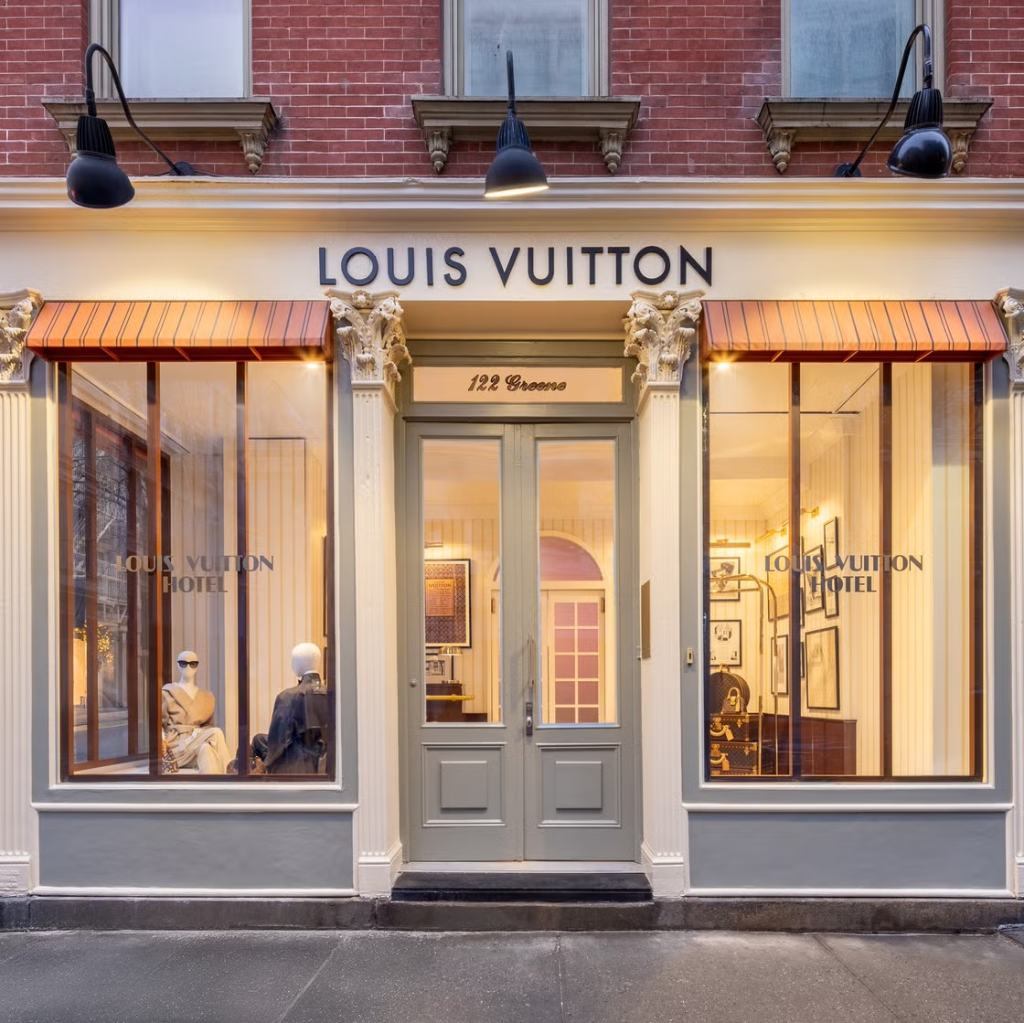
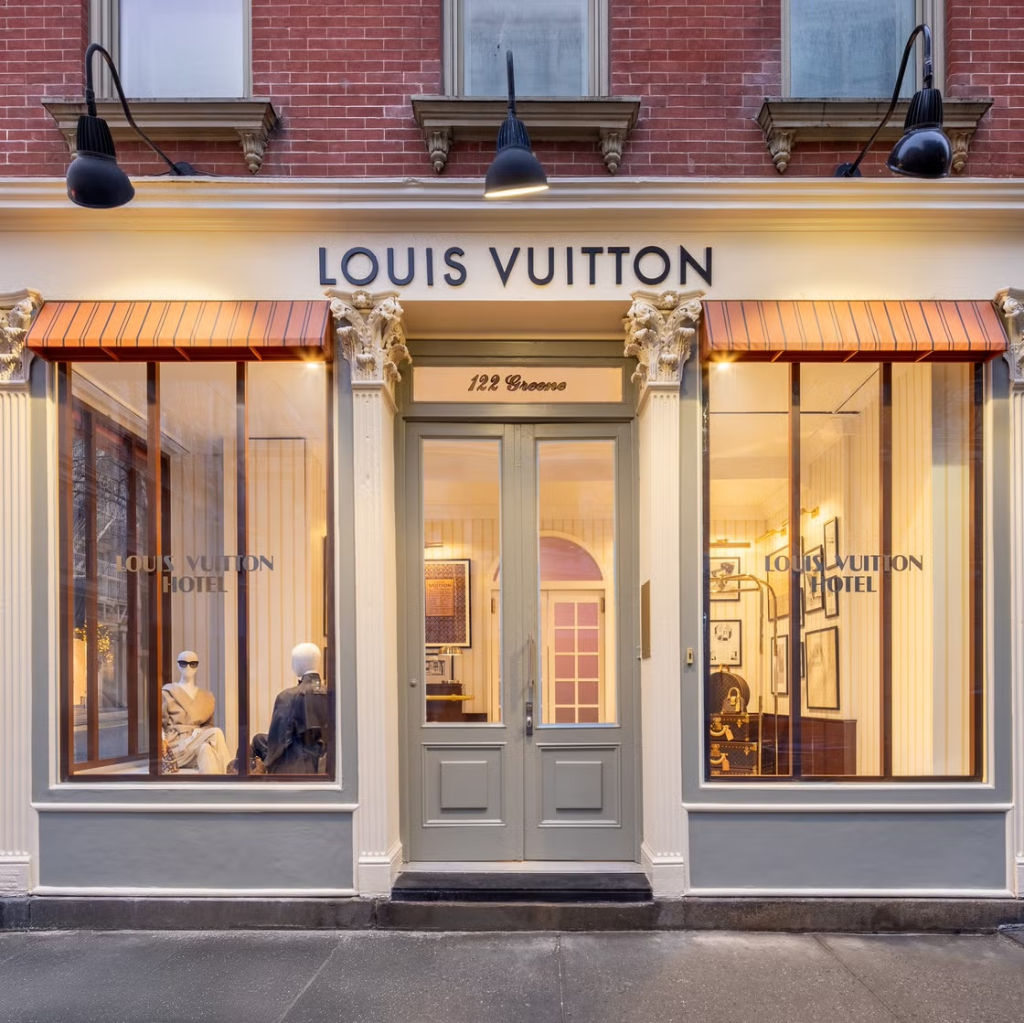
Nestled at 104 Prince Street in the heart of New York's SoHo district, Louis Vuitton transformed a classic cast-iron building into an immersive "hotel" experience. The exterior alone sets the tone—elegant gray doors flanked by those iconic orange-and-brown striped awnings that instantly signal luxury. The classical architecture, complete with ornate moldings and large street-facing windows, provided the perfect canvas for this heritage celebration.
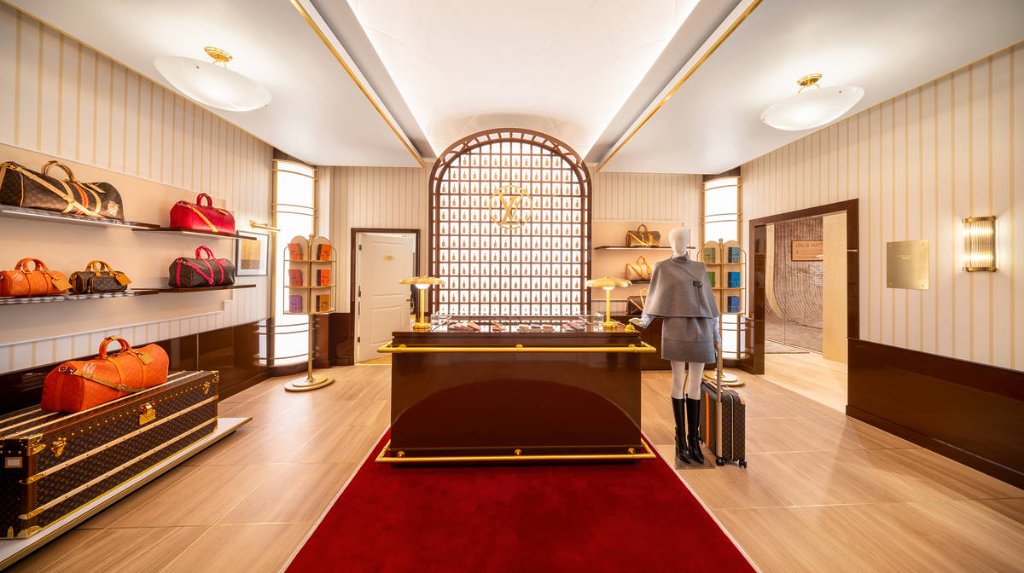
Step inside, and you're immediately transported. A dramatic red carpet leads you through the main gallery, where hardwood floors meet soaring ceilings adorned with subtle gold accents. The centerpiece? A stunning arched installation that serves as both architectural focal point and product showcase—a masterclass in how to make visitors stop and photograph.
Louis Vuitton didn't just create a pop-up—they built a hotel. Each "room" celebrates a different iconic bag style, creating a narrative journey through 130 years of design heritage:
Your check-in begins here. The entrance honors the foldable travel bag first introduced in 1930, setting the stage for the journey ahead. This isn't a sterile retail entrance—it's a hotel lobby that happens to showcase leather goods.
Perhaps the most playful space: a fully realized gym celebrating the lightweight tote that became ubiquitous since 2007. Guests can take photos in front of a mirrored weight rack—a cheeky nod to the bag's "gym-to-work" versatility. The space proves that luxury brands can have fun without sacrificing sophistication.
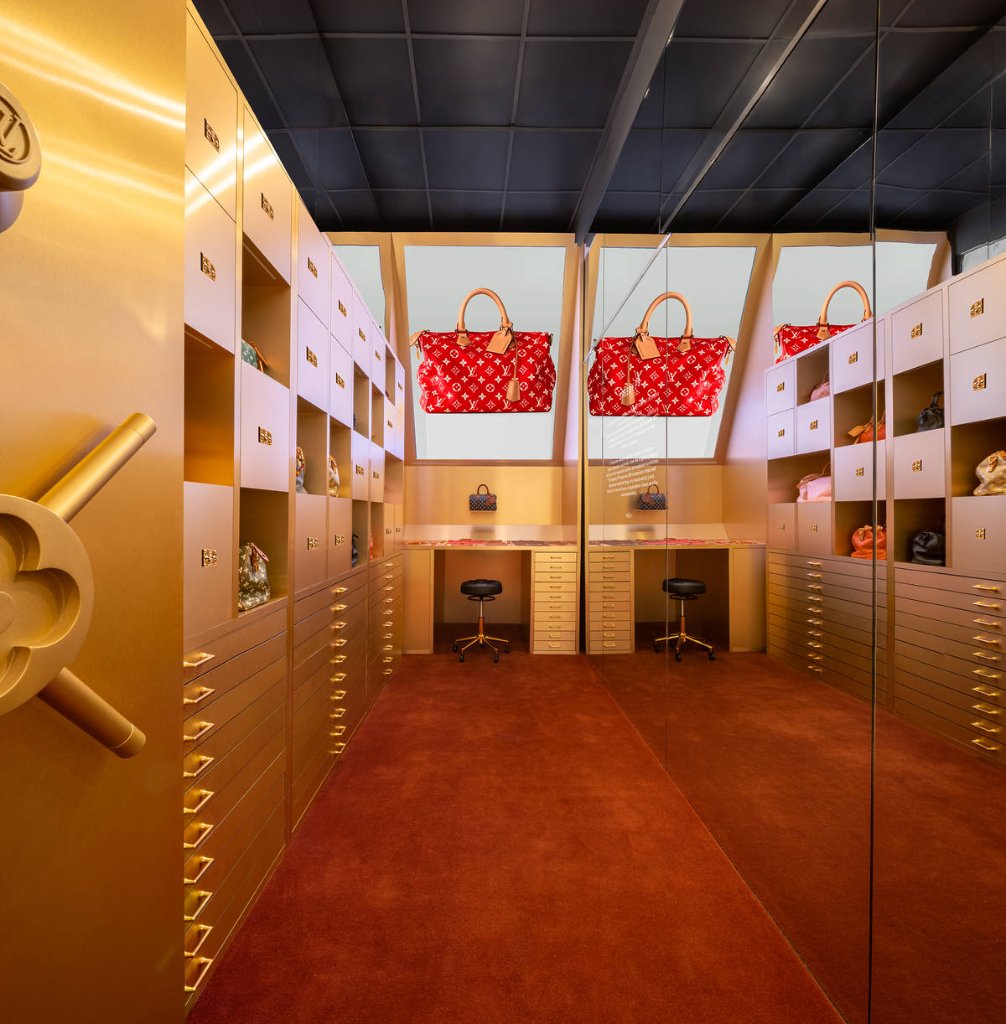
Two connected spaces honoring Louis Vuitton's most iconic handbag. The first room celebrates the original 1930 design, while the adjacent "Safe Room" showcases Men's Creative Director Pharrell Williams' contemporary reinterpretation. It's a masterful way to show evolution—heritage and innovation in conversation.
Descend the stairs to find the pop-up's crown jewel: a moody, subterranean champagne bar. This space honors the Noé bag, created in 1932 at the request of a champagne producer to carry five bottles—four upright, one inverted in the center.
The atmosphere is intimate and luxurious—dark walls, dramatic lighting, and an actual bar setup complete with champagne service. This isn't just for show; guests can actually enjoy champagne while surrounded by the bags that were designed to transport it. It's experiential retail at its most immersive.
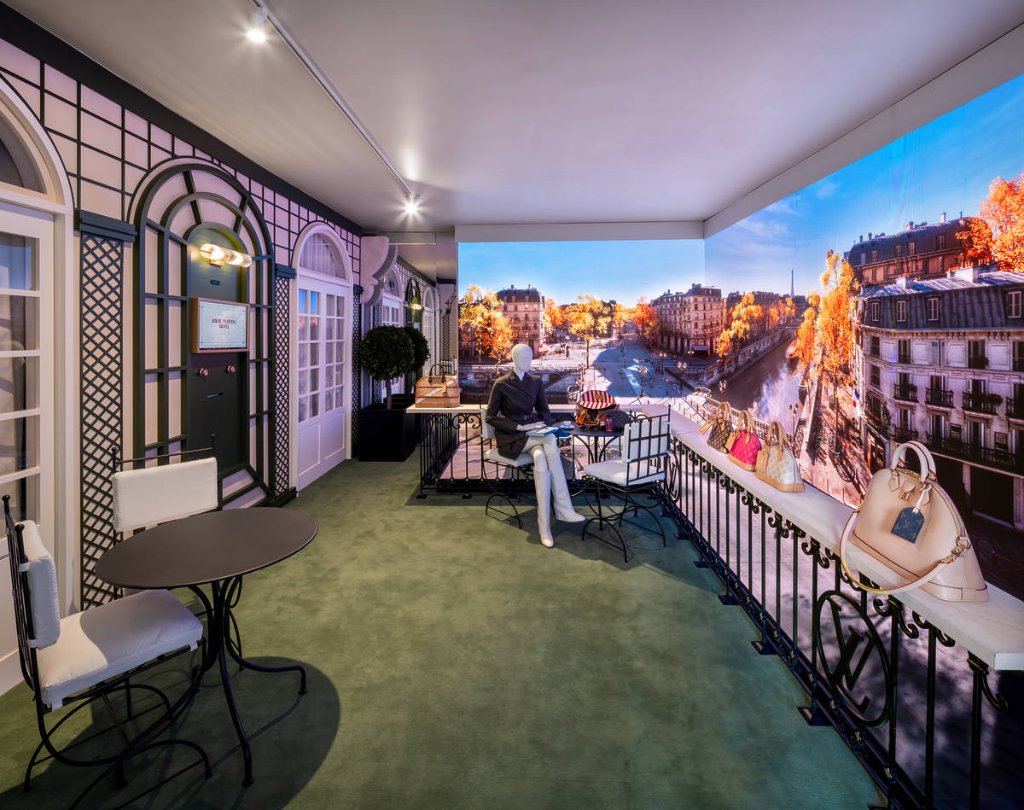
Don't leave without visiting the gem around the corner. The Alma Terrace celebrates the 1992 Art Deco-inspired bag with an ingenious interactive element: a floor-to-ceiling projection of a Parisian street scene.
Here's where it gets magical—guests control the experience using knobs on the wall, changing the projected Paris backdrop from day to night, cycling through sun, rain, and snow. It's not just a photo op; it's participatory theater. You're not just looking at Paris—you're manipulating it, making it your own backdrop.
Bistro furniture sits ready for that perfect Instagram shot, and the immersive projection makes you genuinely feel transported to a Parisian autumn day—or evening, or snowy morning, depending on your mood.
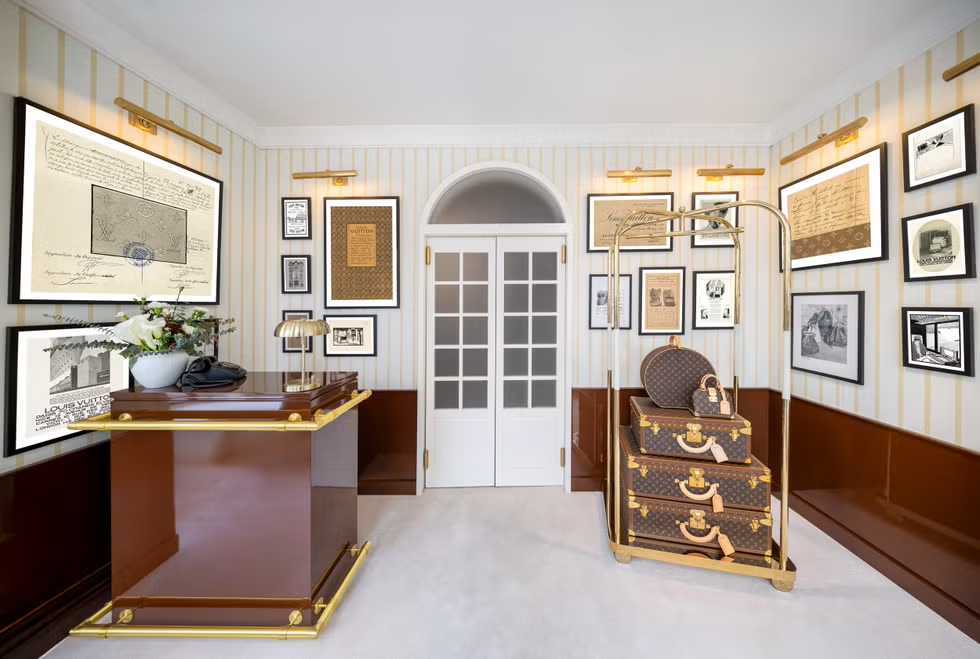
Beyond the experiential rooms, Louis Vuitton included a working atelier where customers can bring pieces for restoration and repair by the brand's artisans. Hot-stamping and exclusive patches available only at this location add personalization opportunities. It's a smart blend of service and experience—giving collectors a reason to return beyond novelty.
Narrative Hospitality: Calling it a "hotel" wasn't marketing speak—it fundamentally changed how people moved through and engaged with the space. Hotel guests explore; shoppers transact. This framing encouraged lingering and discovery.
Interactive Elements Done Right: The Alma Terrace's weather controls and the Neverfull Gym's photo station give guests agency. They're not passive observers—they're participants creating their own experience.
Multi-Sensory Immersion: From the champagne bar's moody atmosphere to the Parisian projection's visual spectacle, each space engaged different senses and emotions. The progression prevented fatigue and maintained excitement.
Heritage with Humor: The gym celebrating a tote bag? Brilliant. Louis Vuitton proved luxury can be playful without being frivolous.
Framing this as a "hotel" rather than a "pop-up" changed everything—from expectations to behavior to social media language. Consider how your venue positioning affects guest psychology.
Those weather-controlling knobs in the Alma Terrace? Pure genius. When people can manipulate their environment, they feel ownership over their experience—and they stay longer documenting it.
The Care Services atelier wasn't just functional—it gave existing customers a reason to visit multiple times. Think beyond one-time experiences to ongoing relationships.
From the bright Keepall Lobby to the moody Champagne Bar to the fantastical Alma Terrace—dramatic mood changes kept the journey dynamic. Design for emotional peaks and valleys, not a flat line.
A gym. A champagne storage bag. These aren't inherently exciting products—but the spatial storytelling transformed them into memorable moments.
This activation demonstrates several key points for property owners:
Multiple Floors = Multiple Acts: The basement champagne bar and around-the-corner Alma Terrace created a sense of discovery. Properties with varied elevations and separate zones command premium rates because they enable narrative complexity.
Infrastructure for Interaction: The Alma Terrace's projection system and control interface required specific technical capabilities. Venues that can support these interactive elements become more valuable.
Location's Cultural Currency: This works in SoHo because SoHo signals creativity and fashion. The neighborhood isn't incidental—it's integral to the brand story.
Louis Vuitton's 130th anniversary pop-up succeeded because it understood a fundamental truth: people don't want to visit a store—they want to visit an experience they can't have anywhere else.
The champagne bar where you can drink the beverage the bag was designed to carry. The Parisian terrace where you control the weather. The gym celebrating a handbag. Each space gave guests a story to tell, a moment to capture, and a reason to return.
For brands: This is your blueprint. Don't just display product—create worlds people want to enter. Give them agency, feed them champagne, let them play with the weather.
For venue professionals: Study what made this possible. The architectural bones, the multi-level layout, the corner location that enabled a second entrance. Properties that can support this level of experiential complexity are worth their premium rates.
The era of the basic pop-up is over. This is what luxury brand activation looks like in 2026—immersive, interactive, hospitality-focused, and deeply rooted in storytelling that guests become part of.
The Louis Vuitton SoHo pop-up runs through April 2026 at 104 Prince Street.
Ready to host your next high-impact brand activation? Browse our collection of SoHo storefronts, multi-level galleries, and character-rich spaces designed for immersive experiences.
Tags
#Pop-Up
#Brand Activation
#Luxury Brands
#SoHo
#Retail Experience
#Louis Vuitton
Share