Venue House
Mar 24, 2026
8 min read

We use cookies to improve your experience and analyze site traffic. By continuing, you agree to our Privacy Policy.
Guides
A breakdown of what corporate clients look for in venues: professionalism, tech infrastructure, catering, and AV capabilities.
Venue House
Mar 24, 2026
Corporate events have distinct requirements. Understanding these separates a good venue from a great one. Unlike social celebrations where atmosphere and aesthetics drive the decision, corporate event planners are accountable to stakeholders, budgets, and measurable outcomes. A product launch, an all-hands meeting, a leadership summit, or a client appreciation dinner each carries professional weight — and the venue either reinforces that credibility or undermines it. Getting the fundamentals right is non-negotiable.
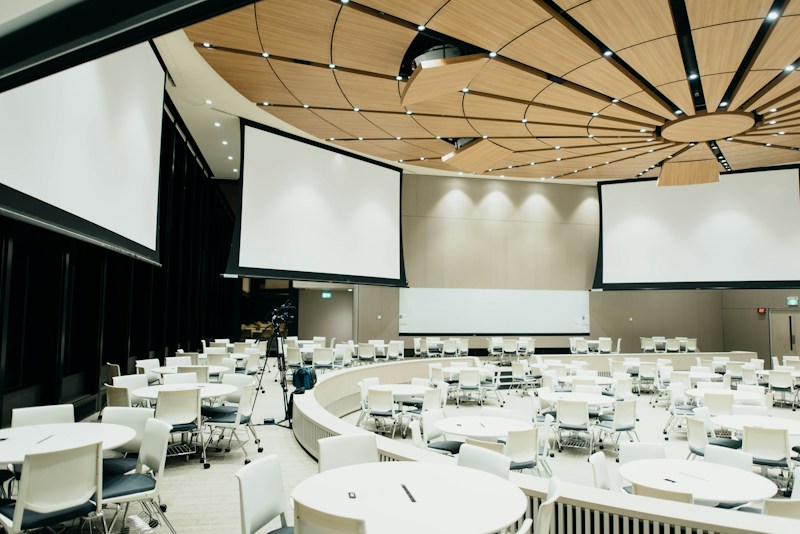
Professional Aesthetics: The visual environment must align with the client's brand identity. Clean, modern, or upscale spaces signal competence and intentionality. Corporate brands won't book graffitied warehouses unless it's an intentional branding play — think a tech startup hosting a "disruptive innovation" summit where industrial-edge aesthetics are part of the message. For most Fortune 500 clients, financial services firms, law practices, or healthcare companies, the standard is polished neutrality: neutral color palettes, well-maintained flooring, contemporary furniture, and controlled lighting. Spaces that feel dated, cluttered, or overly themed risk reflecting poorly on the event host.
Tech Infrastructure: This is often the single biggest differentiator in the corporate segment. A venue with stunning architecture but spotty WiFi will lose repeat business fast.
Flexibility: The best corporate venues can reconfigure within hours to serve radically different functions across a multi-day conference. The ability to configure spaces for theater-style presentations (rows of chairs facing a stage), classroom setups (tables with chairs for note-taking), cocktail receptions (high-tops, lounge clusters, clear flow paths), and breakout sessions (small-group rooms seating 8–20) makes a venue genuinely versatile. Modular wall systems, stackable furniture in storage, and a practiced operations team that can execute a flip in 60–90 minutes are operational gold. Venues like hotel convention centers, purpose-built conference facilities, and high-end private clubs typically excel at this; raw loft spaces may struggle unless they've invested in the infrastructure.
Corporate clients expect a seamless, staff-managed experience from arrival through departure. Food and beverage is not just sustenance — it signals investment and care toward attendees.
Due diligence is a core part of the corporate procurement process. Many large companies require vendors — including venues — to meet specific insurance and compliance thresholds before a contract is signed.
Corporate venues must maintain general liability insurance at a minimum of $1–2 million per occurrence, with many corporate clients requiring $2–5 million and the ability to add the client as an additional insured. Clear safety and emergency protocols must be documented, including evacuation routes, AED locations, and a designated safety contact for the event day. ADA accessibility is both a legal requirement and an ethical baseline — accessible entrances, restrooms, seating areas, and stage access should be standard, not an afterthought. Parking solutions must be quantified: how many spaces, at what cost, managed by whom, and with overflow options documented. Weather contingencies for any outdoor components — whether a rooftop cocktail hour or a garden ceremony — need a written backup plan, not a verbal assurance.
Location decisions for corporate events weigh the convenience of multiple stakeholder groups simultaneously. A downtown financial district hotel ballroom might be perfect for a client dinner but impractical for a team-building offsite. Conversely, a suburban conference center with ample parking may suit an all-day employee training but frustrate out-of-town executives accustomed to walkable city options.
The strongest corporate venues offer:
Corporate venues typically range $3,000–$25,000+ for the space rental alone, with total event budgets often running two to four times that figure once F&B, AV, staffing, and décor are included. At the lower end of the range ($3K–$7K), clients are typically booking mid-size conference rooms or flexible loft spaces for 50–100 people. Mid-range bookings ($8K–$15K) represent full-day use of a ballroom or multi-room conference suite for 100–300 attendees with meals included. Premium events ($15K–$50K+) involve landmark venues, full buyouts, custom production, and white-glove service throughout.
Corporate clients expect these elements included or clearly itemized:
Corporate planners are not buying an experience for themselves — they are buying a system that delivers an outcome for their organization. They prioritize reliability and professionalism over "Instagram-ability." A visually striking venue that can't execute a clean run-of-show is a liability; a less photogenic venue with flawless operations wins repeat business year after year.
What they're really purchasing is the ability to offload logistics so they can focus on the content, relationships, and ROI of the event itself. Every question they have to answer on event day — where's the parking? can we get more microphones? the WiFi is down — is a failure of the venue relationship.
The corporate planners who return to the same venue year after year do so because that venue's team learned their preferences, anticipated their needs, and made them look good in front of their leadership. That kind of trust is earned through consistent, detail-oriented execution — and it translates directly into multi-year contracts, referrals, and a sustainable revenue stream for the venue.
The best corporate venues combine sophistication, functionality, and flawless execution — not as a tagline, but as an operational standard that shows up in every touchpoint from the first site tour to the final invoice.
Tags
#corporate events
#business venues
#conferences
Share
Related
Guides
The venue rental fee is just the start. A field guide to the line items that blow up event budgets — and how to catch them before you sign.
Guides
Townhouses deliver intimacy and charm — but they demand careful planning. A practical guide to running a flawless activation in a residential-scale venue.
Guides
Learn how to select an ideal venue for your brand activation. Key factors include foot traffic, brand alignment, and experiential capabilities.