Venue House
Mar 24, 2026
7 min read

We use cookies to improve your experience and analyze site traffic. By continuing, you agree to our Privacy Policy.
Guides
Strategic guide to selecting the perfect venue for a product launch. Key considerations: audience, brand positioning, logistics, and media coverage.
Venue House
Mar 24, 2026
A product launch venue isn't just a room—it's a brand statement. The moment guests walk through the door, they begin forming impressions about your product, your company, and your ambition. A mismatched venue—too corporate for a lifestyle brand, too casual for an enterprise software debut—can undermine months of product development and marketing investment before you've said a single word. Here's how to select a venue strategically, with the detail and discipline your launch deserves.
Before venue hunting, clarify the fundamentals. Rushing into space searches without answering these questions wastes time, money, and negotiating leverage.
Not all launches are created equal, and the venue category you choose should align tightly with your strategic intent.
Premium/Luxury Launches: High-end hotels, exclusive galleries, or private estates. Think Tesla unveilings or luxury fashion launches. In New York, spaces like Cipriani 42nd Street or the rooftop at 620 Loft & Garden communicate aspiration immediately. In Los Angeles, a Beverly Hills estate or a West Hollywood gallery on Melrose can do the same. For luxury goods, jewelry, or premium automotive, expect venue rental minimums in the $15,000–$50,000+ range—but the environment justifies the spend by reinforcing perceived product value from first contact.
Tech-Forward Launches: Modern warehouse lofts with AV infrastructure, floor-to-ceiling LED screens, and demo stations. Chicago's Fulton Market district, San Francisco's SoMa neighborhood, and Austin's East Side are packed with converted industrial spaces that offer the raw aesthetic tech brands favor while supporting complex AV requirements. Look for venues with at least 20-amp dedicated power circuits per demo station, fiber-optic internet capable of 500+ Mbps symmetrical speeds, and ceiling rigging points for custom trussing.
Experiential Launches: Immersive galleries or blank-canvas warehouses where the product becomes the centerpiece. These spaces—think Brooklyn's Industry City, LA's ROW DTLA complex, or Chicago's Morgan Manufacturing—give creative directors maximum flexibility. Brands like Glossier, Nike, and Spotify have used experiential pop-up venues to build social-first launches where the environment itself becomes shareable content. Budget an additional 20–30% of your venue cost for scenic builds and custom installations in these spaces.
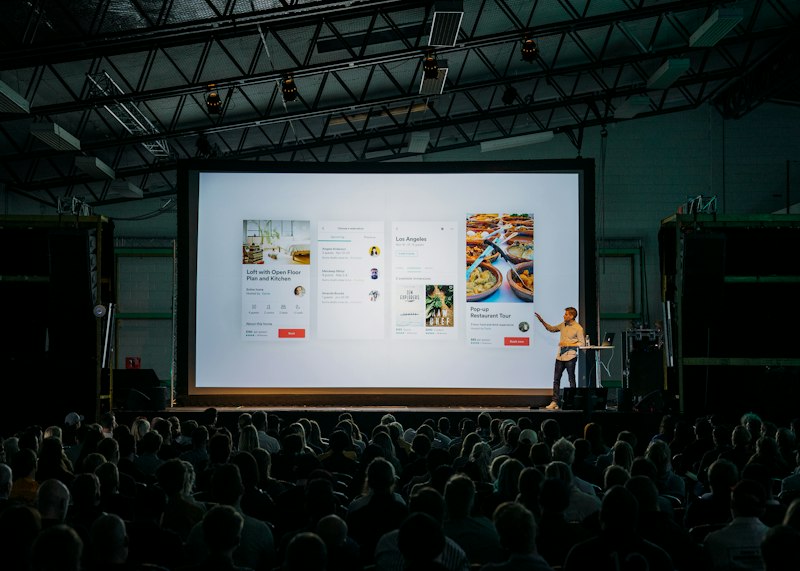
Media-Friendly Launches: Venues with great natural light for photography, acoustic quality for video interviews, and press-optimized layouts. Skylights, large north-facing windows, and neutral wall tones make product photography dramatically easier for media teams working on deadline. Dedicate a separate 200–400 sq ft "press room" with power strips, hard-wired internet drops, and a branded backdrop at 8–10 feet wide for broadcast-quality interviews. Journalists filing same-day stories will remember the venue that made their job easier.
The difference between a smooth launch and a logistical disaster often comes down to how rigorously you've vetted the practical details before signing a contract.
✅ Capacity: Room for press, influencers, VIPs, plus demo areas. A general rule: allocate 15–20 sq ft per person for cocktail-style receptions, 20–25 sq ft if you're incorporating demo stations, and 50+ sq ft per person for seated theatre presentations. Overcrowding signals poor planning; too much empty space kills energy.
✅ Tech: Robust AV, streaming capability, stable WiFi for real-time social. Ask venues specifically about upload speed—not just download. Live-streaming a keynote in 1080p requires a minimum of 10–15 Mbps dedicated upload bandwidth per stream. Confirm that the venue's WiFi can support 200–400 simultaneous devices without throttling, or budget for a dedicated cellular bonding solution ($500–$1,500/day from production companies).
✅ Aesthetics: Does the space enhance or compete with your product? A venue with loud wallpaper, cluttered architectural details, or competing brand signage from previous events is a liability. Visit shortlisted venues during the same time of day as your planned event to assess natural light quality realistically.
✅ Parking: Enough for guests and media vehicles. Media crews arrive in large SUVs and vans carrying equipment. Confirm loading dock access, freight elevator dimensions (minimum 6'x8' for large display units), and proximity to public transit for urban venues where driving may be limited.
✅ Catering: Sophisticated but not intrusive. Finger foods, elevated passed hors d'oeuvres, and premium beverage service keep energy up without creating the distraction of a full sit-down meal. Budget $75–$150 per person for a two-hour cocktail reception at a mid-to-premium tier. Confirm the venue's exclusivity requirements—many premium spaces mandate use of their in-house caterer, which can impact both cost and menu flexibility.
✅ Backup Plans: Indoor/outdoor contingencies, generator access for outdoor spaces, and a clear vendor load-in timeline with buffer windows. Build at least a two-hour production buffer before doors open.
The best product launches treat the venue as a content production environment, not just a gathering space. Every architectural element is a potential frame.
For a mid-scale launch with 150–300 attendees and a total event budget in the $75,000–$150,000 range, allocate proportionally:
The most common budget mistake is underinvesting in AV and production while overspending on venue aesthetics. A stunning space with poor sound, unreliable streaming, or dim lighting will be remembered for the wrong reasons. If budget pressure forces a tradeoff, choose a more modest venue and invest the savings in production quality.
Your venue should amplify your product, not compete with it. Every design choice—from color palette to lighting to layout—should serve your brand story. A product that stands for simplicity and clarity should launch in a space that breathes: clean walls, focused lighting, minimal visual noise. A product built on bold disruption can afford a venue that matches that energy.
Visit every shortlisted space in person. Send your creative director and your AV lead together, not separately. Walk the room at the exact time of day your event will run. Ask the venue manager for a reference from a launch event of similar scale and ask that client specifically about WiFi reliability and load-in logistics—those are the details that rarely make it into venue marketing materials.
Choose wisely, and your venue becomes part of the product launch story—a detail journalists mention, an environment guests photograph, and an experience your audience associates with your brand long after the event ends.
Tags
#product launch
#event strategy
#brand positioning
Share
Related
Guides
The venue rental fee is just the start. A field guide to the line items that blow up event budgets — and how to catch them before you sign.
Guides
Townhouses deliver intimacy and charm — but they demand careful planning. A practical guide to running a flawless activation in a residential-scale venue.
Guides
Learn how to select an ideal venue for your brand activation. Key factors include foot traffic, brand alignment, and experiential capabilities.